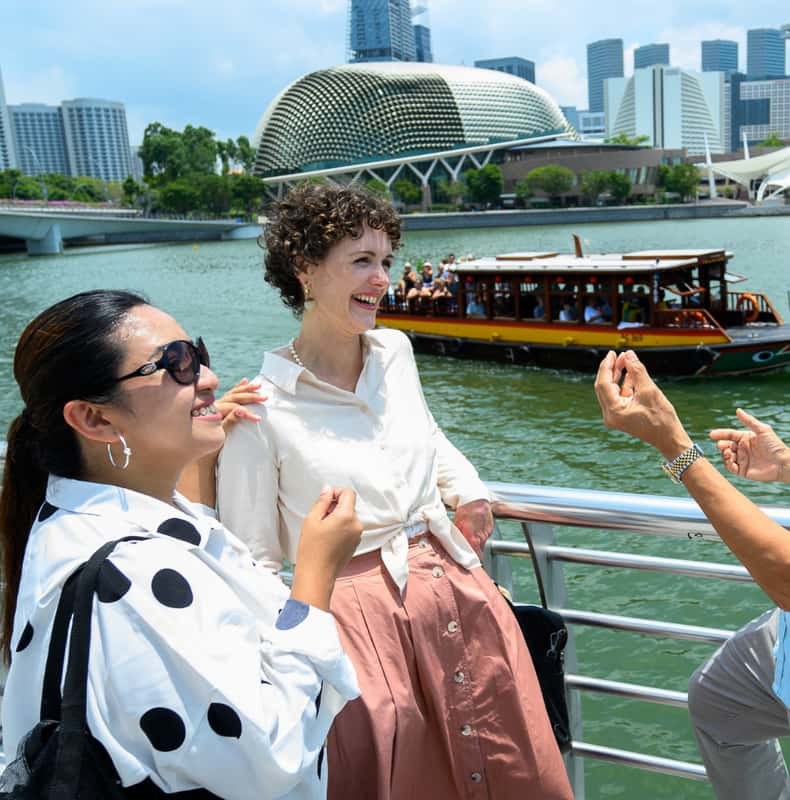
Singapore: Private Flexible Tour with a Licensed Local Guide
City meeting pointPrivateGuide
The plan that bends most: two hours to eight on foot with a licensed local host, and a route built from a form you fill in.
From $83 per person
Every plan below starts at the aircraft door, not at the arrivals kerb, because the hour between those two is the one people forget. It ends when you are back inside the terminal, two hours before your onward departure.
Where a stop carries a length, it is the length the operator's own itinerary prints. Where a journey carries a time, it is the published figure: thirty minutes to the city by road, forty-five by train with the change at Tanah Merah.
Five hours between flights leaves you nothing outside once the overhead is paid, and the airport is a genuinely good place to spend it.
Nothing here needs booking except the lounge, and that refunds up to 24 hours ahead. Short layover routes covers the variations.
Eight hours leaves about five usable, which is enough for one cultural district, the waterfront, and a meal that is not eaten standing up.
Swap Chinatown for Kampong Glam if you want the shortest walk, or for Little India if you want the colour. The order matters less than the discipline of taking one, not two.
Twelve hours leaves eight or nine usable, and the honest framing is that you now choose between breadth and depth.
The depth version takes one large attraction: Sentosa with Universal Studios, or the wildlife route with River Wonders and either the zoo or the night safari. One full-day route package is built around that choice and includes the first admission ticket, which is unusual at this length.
The breadth version takes three districts and both conservatories: Little India and Kampong Glam in the morning, lunch in Chinatown, the civic district and the river in the early afternoon, then the Flower Dome and Cloud Forest before they close at 21:00.
Both need a car. Neither works on a train.
Different enough to be worth planning separately, because the two best free things in the city happen after dark and start at fixed minutes.
Spectra also runs at 21:00, and at 22:00 on Fridays and Saturdays; Garden Rhapsody runs again at 20:45. The two sit about fifteen minutes apart, which is why the running order is a driver's job rather than yours.
| 5 hours | 8 hours | 12 hours | |
|---|---|---|---|
| Usable time | None outside | About 5 hours | 8 to 9 hours |
| Where you spend it | The transit halls | One district and the bay | One island, or three districts |
| Immigration | Not required | Required | Required |
| Typical cost | $36 for a lounge pass | From $80 per person guided | From $120 to $300 per person |
| Meal | In the lounge | A hawker centre | A hawker centre, or inside the attraction |
| Biggest risk | None | A slow immigration bank | Overrunning at one attraction |
The time cost of each stop is the thing that decides an itinerary, and most of them are shorter than people expect.
Things to do on a Singapore layover carries the opening hours and ticket status for each one.
Three failure points, and they are the same three every time.
The immigration bank. A dawn arrival lands with several other long-haul flights and the counters move slowly. That is the one part of the plan you cannot compress, and it is why every plan above gives it a full hour rather than the forty minutes it often takes.
The second district. The eight-hour plan has one district in it for a reason. Adding a second means two transfers instead of one, and the transfers are what eat the day rather than the stops. If you finish early, the bay absorbs the spare time better than another neighbourhood does.
The return leg in the evening peak. Between 18:00 and 20:00 the drive from the city to Changi runs closer to fifty minutes than thirty. If your plan brings you back through that window, treat the thirty-minute figure as optimistic and say so to your driver at the start rather than at the end.
Decide the order before you set off, because deciding it at 30 km/h with a driver waiting is how people end up dropping the wrong thing.
The one exception is an evening plan. There, the light shows are fixed points and everything else moves around them, so drop stops from the front of the day rather than the back.
An hour, and it belongs at the end rather than distributed through the day. Traffic between 18:00 and 20:00 turns a thirty-minute drive into fifty. Security queues at Changi are usually quick but not always. And a plan with its slack at the front simply starts late.
The practical version of that rule is to name the last stop as optional when you set off. A driver who knows which stop can be dropped will keep the day on time without asking you to decide at 30 km/h.
The car, yes. The attractions, mostly no. Every guided window here needs your flight number and arrival terminal before it can be confirmed, and two of the driving operators state that a booking without flight details at least 24 hours ahead is not refunded. Three or four days ahead is comfortable.
The free light shows need nothing. The conservatories sell tickets at the door. The airport's free tour is the exception among the free things: seats are capped and you report 90 minutes early.
The plan that bends most: two hours to eight on foot with a licensed local host, and a route built from a form you fill in.
From $83 per person
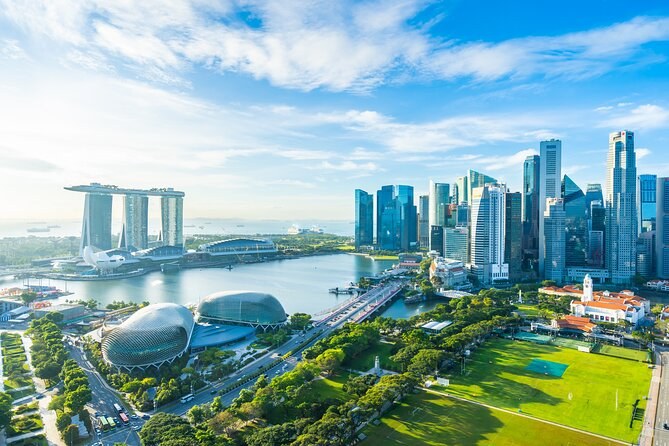
The eight-hour plan in one booking — a private car, seven listed stops with times, collected at your terminal.
From $80 per person
The twelve-hour plan, with the first admission ticket included and five routes to choose between.
From $300 per person
The hours themselves are worked out in the length guide, and every window that fits them is on Singapore Layover Tours.